Showing posts with label nymphets. Show all posts

Tuesday, April 12, 2022

A Poem from Ukraine March 16, 2022 by Vasyl Stus translated by Artem Pulemotov

 So many words; they are like crippled ghosts!

They strike, like bullets, far and close by
But always miss the essence of my life;
They come in rows.
Through these deceitful words I walk and shamble.
There is a fight; I’m on the battlefield,
Where all my soldiers are the words I wield,
And treason’s sown by memories that scramble . . .
Don’t end up fooled when in the good you trust,
And don’t get lost in your afflictions’ mire.
As one remembers things, one grows more tired;
The day I tire, I will die and thus
Hide in the hues of night unseen by most,
Where they don’t know happiness or wrath,
Where they don’t live but chew their own death.
So many words; they are like crippled ghosts!

Name, Phone, Address: A Haunting Photo of a Child's Back Is Now a Symbol of Ukrainian Parents' Terror


Name, Phone, Address: A Haunting Photo of a Child's Back Is Now a Symbol of Ukrainian Parents' Terror

The mother’s hands were shaking when she started writing on her 2-year-old’s body. They trembled so much that she couldn’t write correctly on her first try, even though the information was second nature: Her daughter’s name, Vira, along with her birth date and their family phone numbers.

“I thought that if my husband and I died, Vira could find who she is,” the mother, Oleksandra Makoviy, recalled.

For Vira, standing in a diaper in their house in Kyiv, the writing on her back was a game. She didn’t know that the bombing had begun.

Sign up for The Morning newsletter from the New York Times

Makoviy’s desperate attempt to prepare her daughter for the possibility of being orphaned as the family attempted to escape the Ukrainian capital during the Russian invasion has become a wrenching symbol of the anguish of a nation of parents.

A photo of Vira’s back that Makoviy shared on Instagram has been seen hundreds of thousands of times, after it was amplified by Ukrainian journalists and government officials. Messages of support poured in from people all over the world — many Ukrainian parents said they had taken similar action, and others turned the image into art honoring the country’s innocent on social media.

President Volodymyr Zelenskyy made a direct reference to efforts like Makoviy’s in a speech to the Spanish Parliament last week.

“Just imagine this: mothers in Ukraine write on the backs of their young children,” he said, adding that Russia was destroying “any basis of normal life.”

The photo’s wide reach has led some people, particularly on Twitter, to accuse Makoviy of staging the moment. But she said she shared the photo because she wanted her small audience at the time to feel the “madness” Ukrainian parents were enduring.

The start of Russia’s invasion on Feb. 24 left Makoviy in shock. She described going about the family’s daily routine in a dreamlike state, and recalled trying to play with Vira with the sound of bombs in the distance.

But Makoviy, a 33-year-old painter who was born and raised in Kyiv, was also aware that the man-made island they lived on along the Dnipro River had no underground shelter, she said. Visions of the horrors that Russian forces unleashed on the Syrian city of Aleppo flashed in her mind.

The family packed their car and drove out of the capital at night.

Before they left, Makoviy scrawled Vira’s information on her back. Vira’s age and inability to understand the situation were a blessing, Makoviy said. The child inherited a love of art — she liked to draw on her own body — and had no idea of the gravity of what her mother inscribed on her.

Still, Makoviy was brought to tears on the drive west by her daughter’s repeated pleas to go home and to see her grandmother, who had given her the teddy bear they brought along and didn’t escape Ukraine until later.

Makoviy, who could not sleep or keep food down until they crossed the border into Moldova, did not want to lie. “We can’t go home now,” she told her daughter.

The family eventually arrived in a village in the south of France, where they have found refuge. Speaking by phone, Makoviy said she thought that if the worst had happened, Vira might at least be able to look back at her mother’s Instagram, full of everyday moments from their life before the war, and see that she had been surrounded with love.

After their journey, Vira has physical reminders of that love as well — several volunteers on their route gifted her teddy bears. Along with the bear from her grandmother, who is traveling from Poland to reunite with her, she has amassed a small collection.

Wednesday, October 21, 2020

Symbols and Signs by Vladimir Nabokov

Symbols and Signs

Vladimir Nabokov


For the fourth time in as many years, they were confronted with the problem of what

birthday present to take to a young man who was incurably deranged in his mind. Desires

he had none. Man-made objects were to him either hives of evil, vibrant with a malignant

activity that he alone could perceive, or gross comforts for which no use could be found

in his abstract world. After eliminating a number of articles that might offend him or

frighten him (anything in the gadget line, for instance, was taboo), his parents chose a

dainty and innocent trifle—a basket with ten different fruit jellies in ten little jars.

At the time of his birth, they had already been married for a long time; a score of years

had elapsed, and now they were quite old. Her drab gray hair was pinned up carelessly.

She wore cheap black dresses. Unlike other women of her age (such as Mrs. Sol, their

next-door neighbor, whose face was all pink and mauve with paint and whose hat was a

cluster of brookside flowers), she presented a naked white countenance to the faultfinding

light of spring. Her husband, who in the old country had been a fairly successful

businessman, was now, in New York, wholly dependent on his brother Isaac, a real

American of almost forty years’ standing. They seldom saw Isaac and had nicknamed

him the Prince.

That Friday, their son’s birthday, everything went wrong. The subway train lost its life

current between two stations and for a quarter of an hour they could hear nothing but the

dutiful beating of their hearts and the rustling of newspapers. The bus they had to take

next was late and kept them waiting a long time on a street corner, and when it did come,

it was crammed with garrulous high-school children. It began to rain as they walked up

the brown path leading to the sanitarium. There they waited again, and instead of their

boy, shuffling into the room, as he usually did (his poor face sullen, confused, ill-shaven,

and blotched with acne), a nurse they knew and did not care for appeared at last and

brightly explained that he had again attempted to take his life. He was all right, she said,

but a visit from his parents might disturb him. The place was so miserably understaffed,

and things got mislaid or mixed up so easily, that they decided not to leave their present

in the office but to bring it to him next time they came.

Outside the building, she waited for her husband to open his umbrella and then took his

arm. He kept clearing his throat, as he always did when he was upset. They reached the

bus-stop shelter on the other side of the street and he closed his umbrella. A few feet

away, under a swaying and dripping tree, a tiny unfledged bird was helplessly twitching

in a puddle.

During the long ride to the subway station, she and her husband did not exchange a word,

and every time she glanced at his old hands, clasped and twitching upon the handle of his

umbrella, and saw their swollen veins and brown-spotted skin, she felt the mounting


pressure of tears. As she looked around, trying to hook her mind onto something, it gave

her a kind of soft shock, a mixture of compassion and wonder, to notice that one of the

passengers—a girl with dark hair and grubby red toenails—was weeping on the shoulder

of an older woman. Whom did that woman resemble? She resembled Rebecca Borisovna,

whose daughter had married one of the Soloveichiks—in Minsk, years ago.

The last time the boy had tried to do it, his method had been, in the doctor’s words, a

masterpiece of inventiveness; he would have succeeded had not an envious fellow-patient

thought he was learning to fly and stopped him just in time. What he had really wanted to

do was to tear a hole in his world and escape.

The system of his delusions had been the subject of an elaborate paper in a scientific

monthly, which the doctor at the sanitarium had given to them to read. But long before

that, she and her husband had puzzled it out for themselves. “Referential mania,” the

article had called it. In these very rare cases, the patient imagines that everything

happening around him is a veiled reference to his personality and existence. He excludes

real people from the conspiracy, because he considers himself to be so much more

intelligent than other men. Phenomenal nature shadows him wherever he goes. Clouds in

the staring sky transmit to each other, by means of slow signs, incredibly detailed

information regarding him. His in- most thoughts are discussed at nightfall, in manual

alphabet, by darkly gesticulating trees. Pebbles or stains or sun flecks form patterns

representing, in some awful way, messages that he must intercept. Everything is a cipher

and of everything he is the theme. All around him, there are spies. Some of them are

detached observers, like glass surfaces and still pools; others, such as coats in store

windows, are prejudiced witnesses, lynchers at heart; others, again (running water,

storms), are hysterical to the point of insanity, have a distorted opinion of him, and

grotesquely misinterpret his actions. He must be always on his guard and devote every

minute and module of life to the decoding of the undulation of things. The very air he

exhales is indexed and filed away. If only the interest he provokes were limited to his

immediate surroundings, but, alas, it is not! With distance, the torrents of wild scandal

increase in volume and volubility. The silhouettes of his blood corpuscles, magnified a

million times, flit over vast plains; and still farther away, great mountains of unbearable

solidity and height sum up, in terms of granite and groaning firs, the ultimate truth of his

being.

When they emerged from the thunder and foul air of the subway, the last dregs of the day

were mixed with the street lights. She wanted to buy some fish for supper, so she handed

him the basket of jelly jars, telling him to go home. Accordingly, he returned to their

tenement house, walked up to the third landing, and then remembered he had given her

his keys earlier in the day.

In silence he sat down on the steps and in silence rose when, some ten minutes later, she

came trudging heavily up the stairs, smiling wanly and shaking her head in deprecation of

her silliness. They entered their two-room flat and he at once went to the mirror.


Straining the corners of his mouth apart by means of his thumbs, with a horrible, mask-

like grimace, he removed his new, hopelessly uncomfortable dental plate. He read his


Russian-language newspaper while she laid the table. Still reading, he ate the pale

victuals that needed no teeth. She knew his moods and was also silent.

When he had gone to bed, she remained in the living room with her pack of soiled

playing cards and her old photograph albums. Across the narrow courtyard, where the

rain tinkled in the dark against some ash cans, windows were blandly alight, and in one of

them a black-trousered man, with his hands clasped under his head and his elbows raised,

could he seen lying supine on an untidy bed. She pulled the blind down and examined the

photographs. As a baby, he looked more surprised than most babies. A photograph of a

German maid they had had in Leipzig and her fat-faced fiancé fell out of a fold of the

album. She turned the pages of the book: Minsk, the Revolution, Leipzig, Berlin, Leipzig

again, a slanting house front, badly out of focus. Here was the boy when he was four

years old, in a park, shyly, with puckered forehead, looking away from an eager squirrel,


as he would have from any other stranger. Here was Aunt Rosa, a fussy, angular, wild-

eyed old lady, who had lived in a tremulous world of bad news, bankruptcies, train


accidents, and cancerous growths until the Germans put her to death, together with all the

people she had worried about. The boy, aged six—that was when he drew wonderful

birds with human hands and feet, and suffered from insomnia like a grown-up man. His

cousin, now a famous chess player. The boy again, aged about eight, already hard to

understand, afraid of the wallpaper in the passage, afraid of a certain picture in a book,

which merely showed an idyllic landscape with rocks on a hillside and an old cart wheel

hanging from the one branch of a leafless tree. Here he was at ten—the year they left

Europe. She remembered the shame, the pity, the humiliating difficulties of the journey,

and the ugly, vicious, backward children he was with in the special school where he had

been placed after they arrived in America. And then came a time in his life, coinciding

with a long convalescence after pneumonia, when those little phobias of his, which his

parents had stubbornly regarded as the eccentricities of a prodigiously gifted child,

hardened, as it were, into a dense tangle of logically interacting illusions, making them

totally inaccessible to normal minds.

All this, and much more, she had accepted, for, after all, living does mean accepting the

loss of one joy after another, not even joys in her case, mere possibilities of improvement.

She thought of the recurrent waves of pain that for some reason or other she and her

husband had had to endure; of the in visible giants hurting her boy in some unimaginable

fashion; of the incalculable amount of tenderness contained in the world; of the fate of

this tenderness, which is either crushed or wasted, or transformed into madness; of

neglected children humming to themselves in unswept corners; of beautiful weeds that

cannot hide from the farmer.

It was nearly midnight when, from the living room, she heard her husband moan, and

presently he staggered in, wearing over his nightgown the old overcoat with the astrakhan

collar that he much preferred to his nice blue bathrobe.


“I can’t sleep!” he cried.

“Why can’t you sleep?” she asked. “You were so tired.”

“I can’t sleep because I am dying,” he said, and lay down on the couch.

“Is it your stomach? Do you want me to call Dr. Solov?”

“No doctors, no doctors,” he moaned. “To the devil with doctors! We must get him out of

there quick. Otherwise, we’ll be responsible.... Responsible!” He hurled himself into a

sitting position, both feet on the floor, thumping his forehead with his clenched fist.

“All right,” she said quietly. “We will bring him home tomorrow morning.”

“I would like some tea,” said her husband and went out to the bathroom.

Bending with difficulty, she retrieved some playing cards and a photograph or two that

had slipped to the floor—the knave of hearts, the nine of spades, the ace of spades, the

maid Elsa and her bestial beau. He returned in high spirits, saying in a loud voice, “I have

it all figured out. We will give him the bedroom. Each of us will spend part of the night

near him and the other part on this couch. We will have the doctor see him at least twice a

week. It does not matter what the Prince says. He won’t have much to say anyway,

because it will come out cheaper.”

The telephone rang. It was an unusual hour for it to ring. He stood in the middle of the

room, groping with his foot for one slipper that had come off, and childishly, toothlessly,

gaped at his wife. Since she knew more English than he, she always attended to the calls.

”Can I speak to Charlie?” a girl’s dull little voice said to her now.

“What number do you want? . . . No. You have the wrong number.”

She put the receiver down gently and her hand went to her heart. “It frightened me,” she

said.

He smiled a quick smile and immediately resumed his excited monologue. They would

fetch him as soon as it was day. For his own protection, they would keep all the knives in

a locked drawer. Even at his worst, he presented no danger to other people.

The telephone rang a second time.


The same toneless, anxious young voice asked for Charlie.

“You have the incorrect number. I will tell you what you are doing. You are turning the

letter ‘o’ instead of the zero.” She hung up again.

They sat down to their unexpected, festive midnight tea. He sipped noisily; his face was

flushed; every now and then he raised his glass with a circular motion, so as to make the

sugar dissolve more thoroughly. The vein on the side of his bald head stood out

conspicuously, and silvery bristles showed on his chin. The birthday present stood on the

table. While she poured him another glass of tea, he put on his spectacles and reëxamined

with pleasure the luminous yellow, green, and red little jars. His clumsy, moist lips

spelled out their eloquent labels—apricot, grape, 

Wednesday, August 12, 2020

lolita lana del rey

Would you be mine, would you be my baby tonight?
Could be kissing my fruit punch lips in the bright sunshine
'Cause I like you quite a lot, everything you got, don't you know?
It's you that I adore, though I make the boys fall like dominoes
Kiss me in the D-A-R-K dark tonight
D-a-r-k do it my way
Kiss me in the P-A-R-K park tonight
P-a-r-k let them all say
Hey Lolita, hey
Hey Lolita, hey
I know what the boys want, I'm not gonna play
Hey Lolita, hey
Hey Lolita, hey
Whistle all you want but I'm not gonna say
No more skipping rope, skipping heart beats with the boys downtown
Just you and me feeling the heat even when the sun goes down
I could be yours, I could be your baby tonight
Topple you down from your sky forty stories high
Shining like a God, can't believe I caught you and so
Look at what I bought, not a second thought, oh, Romeo
Kiss me in the D-A-R-K dark tonight
D-a-r-k do it my way
Kiss me in the P-A-R-K park tonight
P-a-r-k let them all say
Hey Lolita, hey
Hey Lolita, hey
I know what the boys want, I'm not gonna play
Hey Lolita, hey
Hey Lolita, hey
Whistle all you want but I'm not gonna say
No more skipping rope, skipping heart beats with the boys downtown
Just you and me feeling the heat even when the sun goes down
I want my cake and I want to eat it too
I want to have fun and be in love with you
I know that I'm a mess with my long hair
And my suntan, short dress, bare feet
I don't care what they say about me, what they say about me
Because I know that it's L-O-V-E
You make me happy, you make me happy
And I never listen to anyone
Let them all say
Hey Lolita, hey
Hey Lolita, hey
I know what the boys want, I'm not gonna play
Hey Lolita, hey
Hey Lolita, hey
Whistle all you want but I'm not gonna say
No more skipping rope, skipping heart beats with the boys downtown
Just you and me feeling the heat even when the sun goes down

lolita lana del rey

Would you be mine, would you be my baby tonight?
Could be kissing my fruit punch lips in the bright sunshine
'Cause I like you quite a lot, everything you got, don't you know?
It's you that I adore, though I make the boys fall like dominoes

Wednesday, July 15, 2020

the-encounter by Vladimir Nabokov

the encounter

by Vladimir Nabokov

enchanted by this strange proximity

Longing, and mystery, and delight…
as if from the swaying blackness
of some slow-motion masquerade
onto the dim bridge you came.

And night flowed, and silent there floated
into its satin streams
that black mask’s wolf-like profile
and those tender lips of yours.

And under the chestnuts, along the canal
you passed, luring me askance.
What did my heart discern in you,
how did you move me so?

In your momentary tenderness,
or in the changing contour of your shoulders,
did I experience a dim sketch
of other—irrevocable—encounters?

Perhaps romantic pity
led you to understand
what had set trembling that arrow
now piercing through my verse?

I know nothing. Strangely
the verse vibrates, and in it, an arrow…
Perhaps you, still nameless, were
the genuine, the awaited one?

But sorrow not yet quite cried out
perturbed our starry hour.
Into the night returned the double fissure
of your eyes, eyes not yet illumed.

For long? For ever? Far off
I wander, and strain to hear
the movement of the stars above our encounter
and what if you are to be my fate…

Longing, and mystery, and delight,
and like a distant supplication….
My heart must travel on.
But if you are to be my fate…

Wednesday, March 11, 2020

kids just love sponge bob


The Girl from Panama BY CLEMENS STARCK

The Girl from Panama

BY CLEMENS STARCK
I'm talking with Mike over coffee.
His wife recently left him. He's lonely.
We're both carpenters, a couple of old guys in baseball caps
plying the trade.
We can frame a wall and hang a door, we can
read a set of blueprints.
But when it comes to women . . .
 
I'm thinking about my mother, who is 91
and very frail. I'm thinking
about my wife, my daughters, my granddaughter,
my sister, old girlfriends, my ex-wife,
and the girl from Panama
in the reading room of the New Orleans public library
forty-five years ago
who slipped a note to me across the table, asking:
"Are you a philosophy?"
 
Rain splatters against the storefront
of the coffee shop. Mike and I are silent
for a long time
before going back to work.
 

Poem copyright ©2019 by Clemens Starck, "The Girl from Panama," from Cathedrals & Parking Lots: Collected Poems, (Empty Bowl Press, 2019). Poem reprinted by permission of Clemens Starck and the publisher.

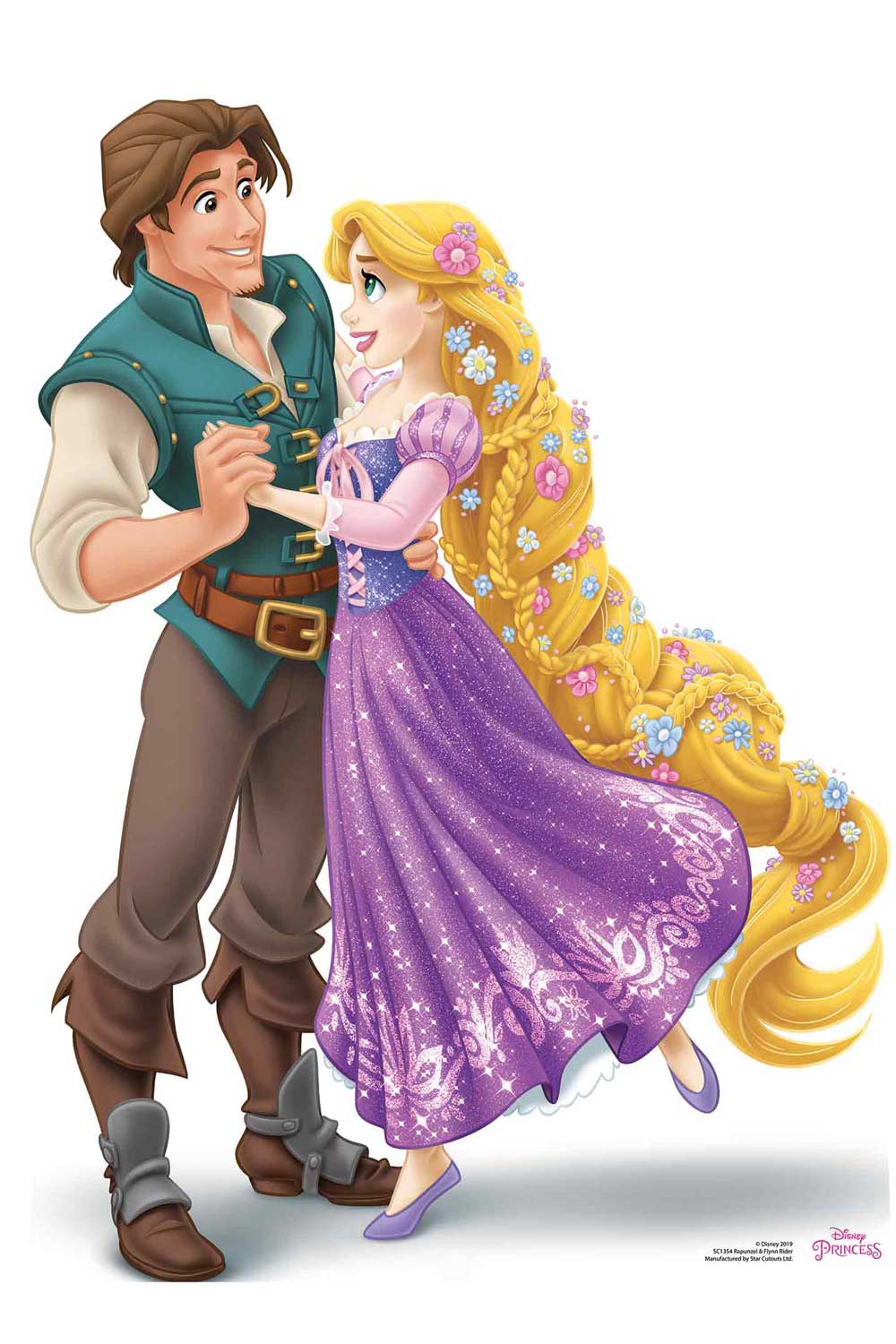
Rapunzel der Brüder Grimm

Rapunzel

der Brüder Grimm


Es war einmal ein Mann und eine Frau, die wünschten sich schon lange vergeblich ein Kind, endlich machte sich die Frau Hoffnung, der liebe Gott werde ihren Wunsch erfüllen. Die Leute hatte in ihrem Hinterhaus ein kleines Fenster, daraus konnte man in einen prächtigen Garten sehen, der voll der schönsten Blumen und Kräuter stand; er war aber von einer hohen Mauer umgeben, und niemand wagte hineinzugehen, weil er einer Zauberin gehörte, die große Macht hatte und von aller Welt gefürchtet ward.
Eines Tags stand die Frau an diesem Fenster und sah in den Garten hinab. Da erblickte sie ein Beet, das mit den schönsten Rapunzeln bepflanzt war, und sie sahen so frisch und grün aus, daß sie lüstern ward und das größte Verlangen empfand, von den Rapunzeln zu essen. Das Verlangen nahm jeden Tag zu, und da sie wußte, daß sie keine davon bekommen konnte, so fiel sie ganz ab, sah blaß und elend aus.
Da erschrak der Mann und fragte: "Was fehlt dir, liebe Frau?"
"Ach, antwortete sie, "wenn ich keine Rapunzeln aus dem Garten hinter unserm Hause zu essen kriege so sterbe ich."
Der Mann, der sie lieb hatte, dachte: Eh du deine Frau sterben läsest holst du ihr von den Rapunzeln, es mag kosten, was es will. In der Abenddämmerung stieg er also über die Mauer in den Garten der Zauberin, stach in aller Eile eine Handvoll Rapunzeln und brachte sie seiner Frau. Sie machte sich sogleich Salat daraus und aß sie in voller Begierde auf. Sie hatten ihr aber so gut geschmeckt, daß sie den andern Tag noch dreimal soviel Lust bekam. Sollte sie Ruhe haben, so mußte der Mann noch einmal in den Garten steigen. Er machte sich also in der Abenddämmerung wieder hinab. Als er aber die Mauer herabgeklettert war, erschrak er gewaltig, denn er sah die Zauberin vor sich stehen.
"Wie kannst du es wagen", sprach sie mit zornigem Blick, "in meinen Garten zu steigen und wie ein Dieb mir meine Rapunzeln zu stehlen? Das soll dir schlecht bekommen!"
"Ach", antwortete er, laßt Gnade für Recht ergehen, ich habe mich nur aus Not dazu entschlossen. Meine Frau hat Eure Rapunzeln aus dem Fenster erblickt und empfindet ein so großes Gelüsten, daß sie sterben würde, wenn sie nicht davon zu essen bekommt.
Da ließ die Zauberin in ihrem Zorne nach und sprach zu ihm: "Verhält es sich so, wie du sagst so will ich dir gestatten, Rapunzeln mitzunehmen, soviel du willst; allein ich mache eine Bedingung: Du mußt mir das Kind geben, das deine Frau zur Welt bringen wird. Es soll ihm gut gehen, und ich will für es sorgen wie eine Mutter."
Der Mann sagte in der Angst alles zu, und als die Frau in Wochen kam, so erschien sogleich die Zauberin, gab dem Kinde den Namen Rapunzel und nahm es mit sich fort.
Rapunzel ward das schönste Kind unter der Sonne. Als es zwölf Jahre alt war, schloß es die Zauberin in einen Turm, der in einem Walde lag und weder Treppe noch Türe hatte; nur ganz oben war ein kleines Fensterchen. Wenn die Zauberin hinein wollte, so stellte sie sich unten hin und rief:


    "Rapunzel, Rapunzel,
    Laß mir dein Haar herunter!"

Rapunzel hatte lange, prächtige Haare, fein wie gesponnen Gold. Wenn sie nun die Stimme der Zauberin vernahm, so band sie ihre Zöpfe los, wickelte sie oben um einen Fensterhaken, und dann fielen die Haare zwanzig Ellen tief herunter, und die Zauberin stieg daran hinauf.
Nach ein paar Jahren trug es sich zu, daß der Sohn des Königs durch den Wald ritt und an dem Turm vorüberkam. Da hörte er einen Gesang, der war so lieblich, daß er stillhielt und horchte. Das war Rapunzel, die in ihrer Einsamkeit sich die Zeit damit vertrieb, ihre süße Stimme erschallen zu lassen. Der Königssohn wollte zu ihr hinaufsteigen und suchte nach einer Türe des Turms: aber es war keine zu finden. Er ritt heim. Doch der Gesang hatte ihm so sehr das Herz gerührt, daß er jeden Tag hinaus in den Wald ging und zuhörte. Als er einmal so hinter einem Baum stand, sah er, daß eine Zauberin herankam, und hörte, wie sie hinaufrief:

    "Rapunzel, Rapunzel,
    Laß mir dein Haar herunter!"

Da ließ Rapunzel die Haarflechten herab, und die Zauberin stieg zu ihr hinauf. "Ist das die Leiter, auf welcher man hinaufkommt, so will ich auch einmal mein Glück versuchen." Und den folgenden Tag, als es anfing dunkel zu werden, ging er zu dem Turme und rief:

    "Rapunzel, Rapunzel,
    Laß mir dein Haar herunter!"

Alsbald fielen die Haare herab, und der Königssohn stieg hinauf. Anfangs erschrak Rapunzel gewaltig, als ein Mann zu ihr hereinkam, wie ihre Augen noch nie einen erblickt hatten. Doch der Königssohn fing an, ganz freundlich mit ihr zu reden, und erzählte ihr, daß von ihrem Gesang sein Herz so sehr sei bewegt worden, daß es ihm keine Ruhe gelassen und er sie selbst habe sehen müssen. Da verlor Rapunzel ihre Angst, und als er sie fragte, ob sie ihn zum Manne nehmen wollte, und sie sah, daß er jung und schön war, so dachte sie: Der wird mich lieber haben als die alte Frau Gotel, und sagte "Ja", und legte ihre Hand in seine Hand.
Sie sprach: "Ich will gerne mit dir gehen, aber ich weiß nicht, wie ich herabkommen kann. Wenn du kommst, so bring jedesmal einen Strang Seide mit, daraus will ich eine Leiter flechten, und wenn die fertig ist, so steige ich herunter, und du nimmst mich auf dein Pferd."
Sie verabredeten, daß er bis dahin alle Abende zu ihr kommen sollte: Denn bei Tag kam die Alte.
Die Zauberin merkte auch nichts davon, bis einmal Rapunzel anfing und zu ihr sagte: "Sag Sie mir doch, Frau Gotel, wie kommt es nur, Sie wird mir viel schwerer heraufzuziehen als den jungen Königssohn, der ist in einem Augenblick bei mir?"
"Ach du gottloses Kind!" rief die Zauberin, "was muß ich von dir hören; ich dachte, ich hatte dich von aller Welt geschieden, und du hast mich doch betrogen!"
In ihrem Zorn packte sie die schönen Haare der Rapunzel, schlug sie ein paarmal um ihre linke Hand, griff eine Schere mit der rechten, und, ritsch, ratsch, waren sie abgeschnitten, und die schönen Flechten lagen auf der Erde. Und sie war so unbarmherzig, daß sie die arme Rapunzel in eine Wüstenei brachte, wo sie in großem Jammer und Elend leben mußte.
Denselben Tag aber, wo sie Rapunzel verstoßen hatte, machte abends die Zauberin die abgeschnittenen Flechten oben am Fensterhaken fest, und als der Königssohn kam und rief:

    "Rapunzel, Rapunzel,
    Laß mir dein Haar herunter!"

so ließ sie die Haare hinab. Der Königssohn stieg hinauf, aber er fand oben nicht seine liebste Rapunzel, sondern die Zauberin, die ihn mit bösen und giftigen Blicken ansah.
"Aha", rief sie höhnisch, "du willst die Frau Liebste holen, aber der schöne Vogel sitzt nicht mehr im Nest und singt nicht mehr, die Katze hat ihn geholt und wird dir auch noch die Augen auskratzen Für dich ist Rapunzel verloren, du wirst sie nie wieder erblicken!"
Der Königssohn geriet außer sich vor Schmerzen, und in der Verzweiflung sprang er den Turm herab. Das Leben brachte er davon, aber die Dornen, in die er fiel, zerstachen ihm die Augen. Da irrte er blind im Wald umher, aß nichts als Wurzeln und Beeren und tat nichts als jammern und weinen über den Verlust seiner liebsten Frau.
So wanderte er einige Jahre im Elend umher und geriet endlich in die Wüstenei wo Rapunzel mit den Zwillingen, die sie geboren hatte, einem Knaben und einem Mädchen, kümmerlich lebte. Er vernahm eine Stimme, und sie deuchte ihm so bekannt. Da ging er darauf zu und wie er herankam, erkannte ihn Rapunzel und fiel ihm um den Hals und weinte. Zwei von ihren Tränen aber benetzten seine Augen, da wurden sie wieder klar, und er konnte damit sehen wie sonst. Er führte sie in sein Reich, wo er mit Freude empfangen ward, und sie lebten noch lange glücklich und vergnügt.

Rapunzel


Rapunzel

Rapunzel

by the Grimm Brothers


There were once a man and a woman who had long in vain wished for a child. At length the woman hoped that God was about to grant her desire. These people had a little window at the back of their house from which a splendid garden could be seen, which was full of the most beautiful flowers and herbs. It was, however, surrounded by a high wall, and no one dared to go into it because it belonged to an enchantress, who had great power and was dreaded by all the world.
One day the woman was standing by this window and looking down into the garden, when she saw a bed which was planted with the most beautiful rampion - Rapunzel, and it looked so fresh and green that she longed for it, and had the greatest desire to eat some. This desire increased every day, and as she knew that she could not get any of it, she quite pined away, and began to look pale and miserable.
Then her husband was alarmed, and asked, "What ails you, dear wife?"
"Ah," she replied, "if I can't eat some of the rampion, which is in the garden behind our house, I shall die."
The man, who loved her, thought, sooner than let your wife die, bring her some of the rampion yourself, let it cost what it will. At twilight, he clambered down over the wall into the garden of the enchantress, hastily clutched a handful of rampion, and took it to his wife. She at once made herself a salad of it, and ate it greedily. It tasted so good to her - so very good, that the next day she longed for it three times as much as before. If he was to have any rest, her husband must once more descend into the garden. In the gloom of evening, therefore, he let himself down again. But when he had clambered down the wall he was terribly afraid, for he saw the enchantress standing before him.
"How can you dare," said she with angry look, "descend into my garden and steal my rampion like a thief? You shall suffer for it."
"Ah," answered he, "let mercy take the place of justice, I only made up my mind to do it out of necessity. My wife saw your rampion from the window, and felt such a longing for it that she would have died if she had not got some to eat."
Then the enchantress allowed her anger to be softened, and said to him, "If the case be as you say, I will allow you to take away with you as much rampion as you will, only I make one condition, you must give me the child which your wife will bring into the world. It shall be well treated, and I will care for it like a mother."
The man in his terror consented to everything, and when the woman was brought to bed, the enchantress appeared at once, gave the child the name of Rapunzel, and took it away with her.
Rapunzel grew into the most beautiful child under the sun. When she was twelve years old, the enchantress shut her into a tower, which lay in a forest, and had neither stairs nor door, but quite at the top was a little window. When the enchantress wanted to go in, she placed herself beneath it and cried,


    "Rapunzel, Rapunzel,
    Let down your hair!"

Rapunzel had magnificent long hair, fine as spun gold, and when she heard the voice of the enchantress she unfastened her braided tresses, wound them round one of the hooks of the window above, and then the hair fell twenty ells down, and the enchantress climbed up by it.
After a year or two, it came to pass that the king's son rode through the forest and passed by the tower. Then he heard a song, which was so charming that he stood still and listened. This was Rapunzel, who in her solitude passed her time in letting her sweet voice resound. The king's son wanted to climb up to her, and looked for the door of the tower, but none was to be found. He rode home, but the singing had so deeply touched his heart, that every day he went out into the forest and listened to it. Once when he was thus standing behind a tree, he saw that an enchantress came there, and he heard how she cried,

    "Rapunzel, Rapunzel,
    Let down your hair!"

Then Rapunzel let down the braids of her hair, and the enchantress climbed up to her. "If that is the ladder by which one mounts, I too will try my fortune," said he, and the next day when it began to grow dark, he went to the tower and cried,

    "Rapunzel, Rapunzel,
    Let down your hair!"

Immediately the hair fell down and the king's son climbed up. At first Rapunzel was terribly frightened when a man, such as her eyes had never yet beheld, came to her. But the king's son began to talk to her quite like a friend, and told her that his heart had been so stirred that it had let him have no rest, and he had been forced to see her. Then Rapunzel lost her fear, and when he asked her if she would take him for her husband, and she saw that he was young and handsome, she thought, he will love me more than old dame gothel does. And she said yes, and laid her hand in his.
She said, "I will willingly go away with you, but I do not know how to get down. Bring with you a skein of silk every time that you come, and I will weave a ladder with it, and when that is ready I will descend, and you will take me on your horse."
They agreed that until that time he should come to her every evening, for the old woman came by day.
The enchantress remarked nothing of this, until once Rapunzel said to her, "Tell me, Dame Gothel, how it happens that you are so much heavier for me to draw up than the young king's son - he is with me in a moment."
"Ah! You wicked child," cried the enchantress. "What do I hear you say. I thought I had separated you from all the world, and yet you have deceived me."
In her anger she clutched Rapunzel's beautiful tresses, wrapped them twice round her left hand, seized a pair of scissors with the right, and snip, snap, they were cut off, and the lovely braids lay on the ground. And she was so pitiless that she took poor Rapunzel into a desert where she had to live in great grief and misery.
On the same day that she cast out Rapunzel, however, the enchantress fastened the braids of hair, which she had cut off, to the hook of the window, and when the king's son came and cried,

    "Rapunzel, Rapunzel,
    Let down your hair!"

she let the hair down. The king's son ascended, but instead of finding his dearest Rapunzel, he found the enchantress, who gazed at him with wicked and venomous looks.
"Aha," she cried mockingly, "you would fetch your dearest, but the beautiful bird sits no longer singing in the nest. The cat has got it, and will scratch out your eyes as well. Rapunzel is lost to you. You will never see her again."
The king's son was beside himself with pain, and in his despair he leapt down from the tower. He escaped with his life, but the thorns into which he fell pierced his eyes. Then he wandered quite blind about the forest, ate nothing but roots and berries, and did naught but lament and weep over the loss of his dearest wife.
Thus he roamed about in misery for some years, and at length came to the desert where Rapunzel, with the twins to which she had given birth, a boy and a girl, lived in wretchedness. He heard a voice, and it seemed so familiar to him that he went towards it, and when he approached, Rapunzel knew him and fell on his neck and wept. Two of her tears wetted his eyes and they grew clear again, and he could see with them as before. He led her to his kingdom where he was joyfully received, and they lived for a long time afterwards, happy and contented.

baby lilith


lilith


God is dead